
Trout Species in West Virginia
West Virginia is home to a remarkable diversity of trout species. From native brook trout in mountain streams to stocked rainbows and browns, the Mountain State offers world-class opportunities for every angler.
Meet the Fish
Each species has unique characteristics that make identifying and targeting them a rewarding challenge.
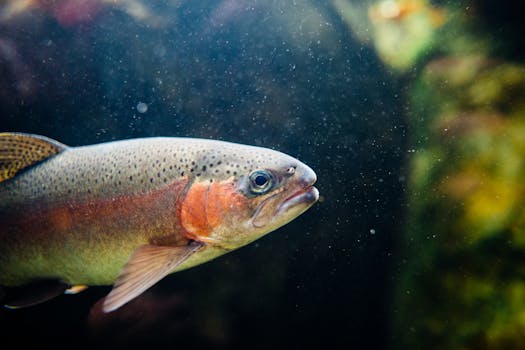
Rainbow Trout
Oncorhynchus mykiss
Recognized by the distinctive pink-to-red lateral stripe running along each side and scattered black spots across the body. They have a silvery-green base color that intensifies during spawning.
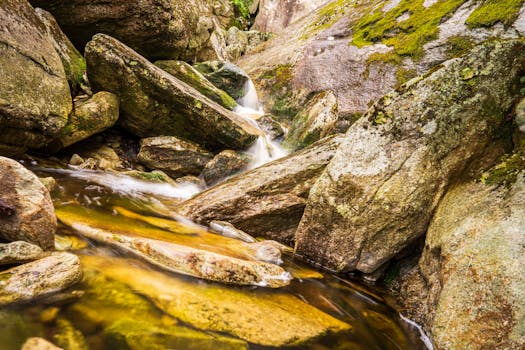
Brook Trout
Salvelinus fontinalis
West Virginia's only native trout species. Identified by light spots on a dark background, white leading edges on fins, and vibrant red spots surrounded by blue halos during spawning season.
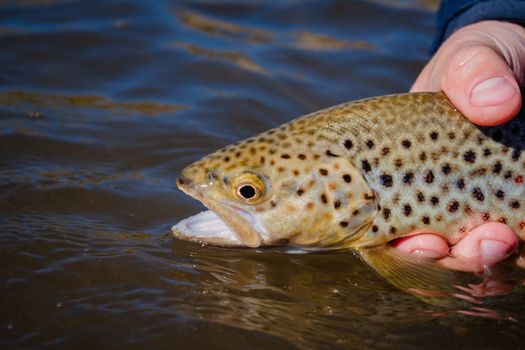
Brown Trout
Salmo trutta
Features a golden-brown to yellowish base with large black and red spots haloed in white. Belly ranges from pale yellow to deep orange. Known for being more wary and harder to catch than rainbows.
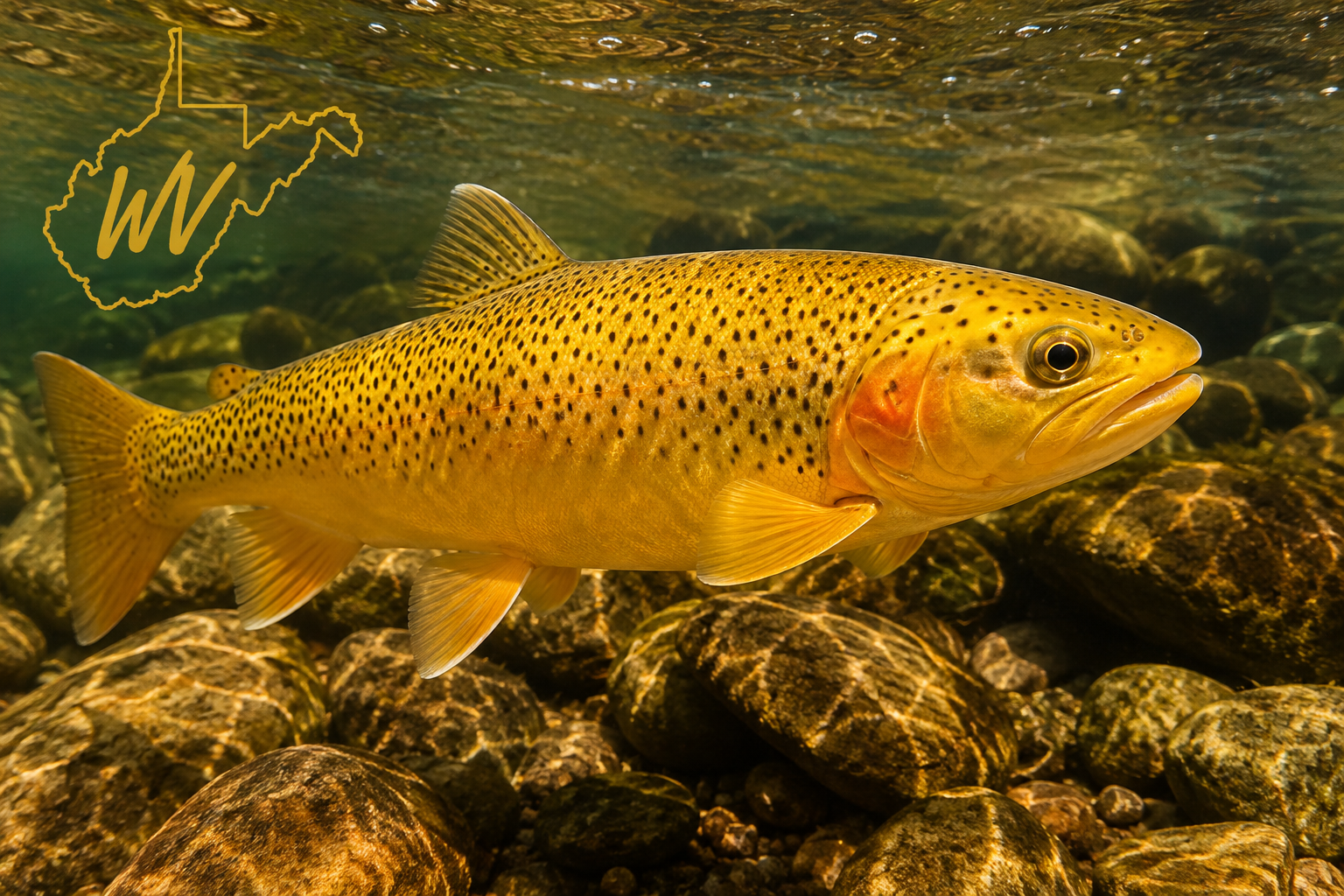
Golden Trout
Oncorhynchus mykiss aguabonita
A subspecies of rainbow trout prized for its striking golden-yellow coloration. Features a dark olive back, vibrant gold sides, and a bold pink lateral stripe. Red spots and white-tipped fins complete the look.
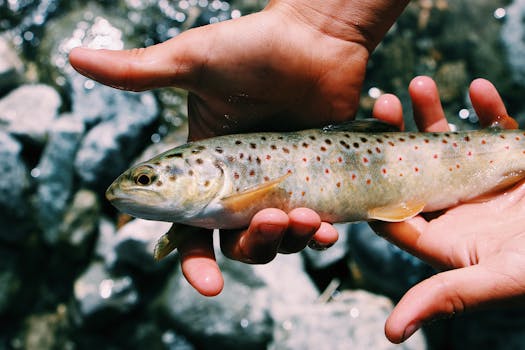
Tiger Trout
Salmo trutta × Salvelinus fontinalis
A sterile hybrid cross between a brown trout and a brook trout. Instantly recognizable by its bold, dark tiger-stripe or maze-like pattern across a gold-to-bronze body. Unique and rare in WV waters.
Conservation & Native Brook Trout
The brook trout is West Virginia's only truly native trout and serves as a critical indicator of stream health. Because brookies require cold, pristine water — typically below 68°F — their presence signals an ecosystem in excellent condition.
Habitat loss, acid rain, warming temperatures, and competition from introduced species have reduced brook trout range significantly. Today, native populations persist primarily in remote, high-elevation headwater streams throughout the Monongahela National Forest and other protected areas.
The WV Division of Natural Resources works to protect and restore brook trout habitat through stream restoration projects, riparian buffer improvements, and careful water quality monitoring. Anglers play a role too — practicing catch-and-release in sensitive waters and respecting posted regulations helps preserve these remarkable fish for future generations.
Ready to Cast Your Line?
Find the best trout streams and check current regulations before heading out on the water.